Mechanism of Acid-Catalyzed Acetal Formation

Acetal derivatives of aldehydes and ketones are prepared by an acid-catalyzed dehydration reaction with alcohols or diols. An example is shown below.
Writing a mechanism for this reaction provides a good test of ones' understanding of acid-catalyzed processes.
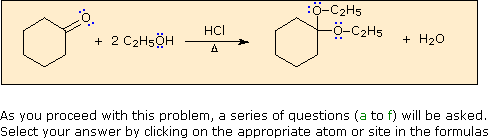
Overall reaction: cyclohexanone + 2 ethanol, HCl/heat, giving cyclohexanone diethyl acetal + water

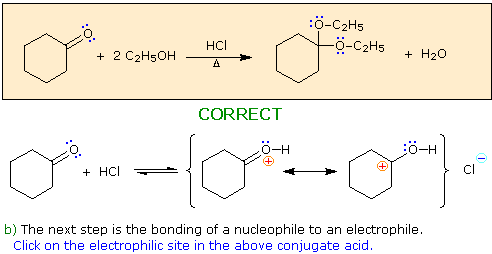
a) The first step in this process must be an acid-base proton transfer.
Click on the basic atom that is protonated to initiate this transformation.

When you have made a correct selection, an equation showing the reaction for that step will appear, and a new question will be posed. Incorrect selections will open an alert window displaying an explanatory message. The overall transformation will remain displayed in the colored box at each stage.
The Mechanism of Acetal Formation


Step a result: cyclohexanone protonated by HCl to its resonance-stabilized conjugate acid, with chloride

The Mechanism of Acetal Formation


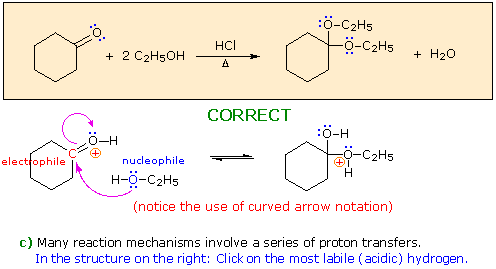
Step b: ethanol oxygen adds to protonated cyclohexanone carbonyl carbon, curved arrows, giving oxocarbenium adduct

The Mechanism of Acetal Formation


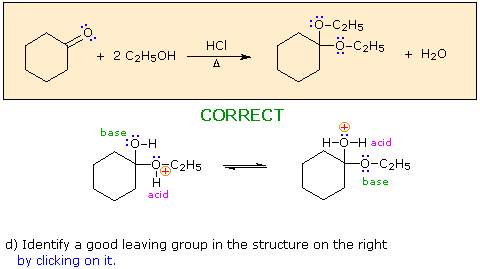
Step c: proton transfer in hemiacetal-type intermediate, labeling acidic OH proton, base, and leaving group

The Mechanism of Acetal Formation


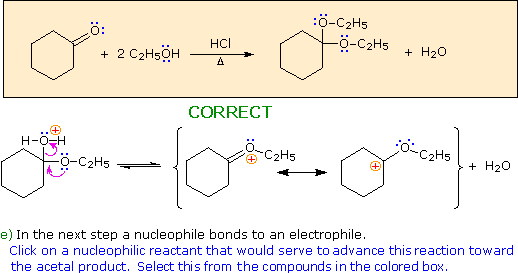
Step d-e: loss of water gives resonance-stabilized oxocarbenium ion bearing one ethoxy group, plus water

Choose a nucleophile from the reactants in the colored box.

The Mechanism of Acetal Formation


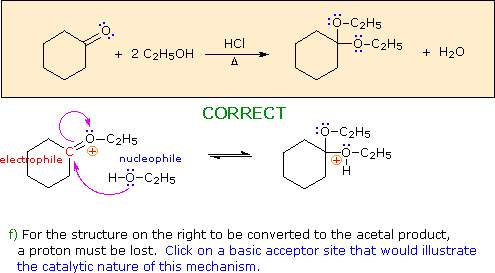
Step e-f: second ethanol adds to oxocarbenium carbon, giving protonated diethyl acetal needing deprotonation

Hint: Choose a base from the reactants in the colored box.

Acetal Formation


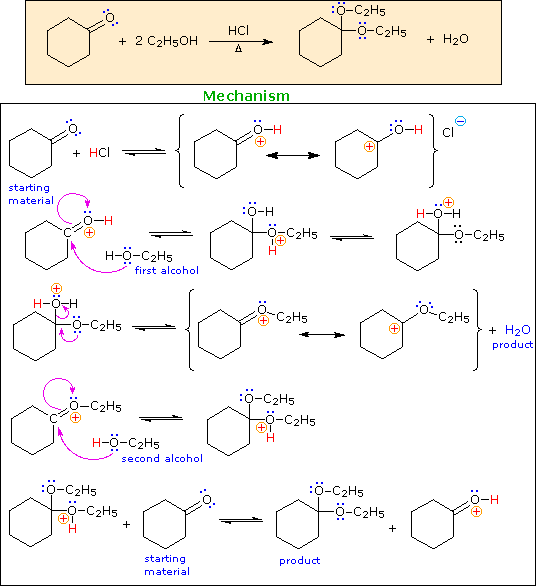
Congratulations. You have finished this problem. A summary of the steps in this acid-catalyzed mechanism is shown below.

Full acid-catalyzed mechanism of cyclohexanone diethyl acetal formation, all steps from protonation to product


Close this tab to return to the textbook.