Ene-Like Elimination Reactions
The retro ene reaction fragments a molecule into two pieces, each having a new double bond. Concerted eliminations of this kind are potentially useful for getting rid of unwanted functions, or for the introduction of carbon-carbon double bonds. The following diagram shows two such applications. In the initial display a reference retro ene reaction is written in the shaded box on the left, and two decarboxylation reactions are shown to the right. The top reaction represents the decarboxylation of β-ketoacids and malonic acids, that was an important step in syntheses using acetoacetic ester and malonic ester starting materials. The second reaction demonstrates that this simple elimination may occur with any β,γ-unsaturated carboxylic acid.
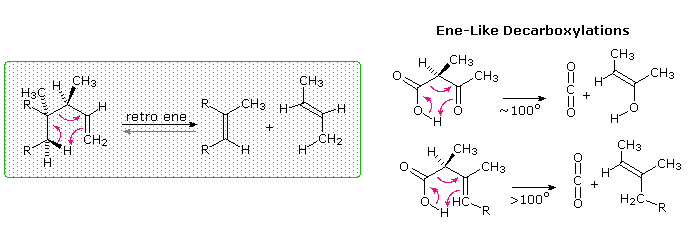
A second set of elimination reactions will be displayed by clicking on the diagram. The first ester pyrolysis reaction requires strong heating, but the xanthate ester in the second example decomposes under much milder conditions. The small thiocarbonate fragment undergoes further decomposition to methane thiol and COS. These eliminations are useful for converting alcohols to alkenes by a syn-mechanism. Two useful related eliminations, that are not classical retro ene transformations, are the selenoxide and amine oxide eliminations shown by clicking on the diagram a second time.