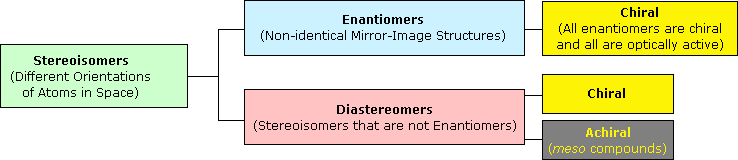
Summary of Isomerism
General Summary of Isomerism and Molecular Descriptors
Methods of Describing Molecules with Increasing Refinement
-
Composition
The number and kinds of atoms that make up a molecule. This information is supplied by a molecular formula. -
Constitution
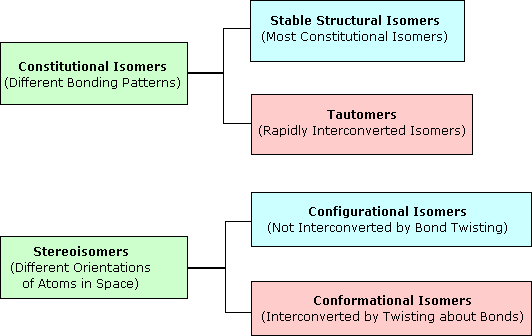
The bonding pattern of the atoms of a molecule (ie. which atoms are connected to which other atoms and by what kind of bonds). Different bonding constitutions are interconverted only by breaking and reforming covalent bonds. This information is supplied by a structural formula, and is implicit in the IUPAC name. -
Configuration
The permanent spatial relationship of the atoms of a molecule to each other. Different configurations are interconverted only by breaking and reforming covalent bonds. This information is given in a stereo-formula, and is also provided by a prefix to the IUPAC name (eg. cis & trans). -
Conformation
The variable spatial orientation of the atoms of a molecule to each other that occurs by rotation or twisting of bonds. Different conformations are interconverted without breaking covalent bonds. This information is supplied by conformational formulas, and also by nomenclature terms (eg. gauche & anti).
Relationship of Constitutional and Stereoisomers
Relationships of Stereoisomers